Showing posts with label science. Show all posts

Wednesday, May 23, 2012

SpaceX's Falcon 9 headed for ISS

The Falcon 9 launching from Cape Canaveral (courtesy SpaceX).

On Tuesday, May 22, at 3:44 a.m. EDT (0744 GMT) SpaceX successfully launched its Falcon 9 rocket from Cape Canaveral, Florida.  This third flight of the independently designed and operated rocket system carries along with it the Dragon capsule for its second flight.  While the first two launches of the Falcon 9 and the previous launch with the Dragon were for test purposes, this flight has a different mission.  It is to be the first commercial resupply of the International Space Station (ISS).

Based out of Hawthorne, California, Space Exploration Technologies Corporation, or SpaceX, won a $278 million contract with NASA to develop their Falcon rocket systems for eventual resupply mission to ISS.  Since the retirement of NASA's Space Shuttle program, the space station has not had a single American spacecraft dock and all resupply missions have been carried out by other ISS member nations.  Currently SpaceX has a contract with NASA that runs until 2015 and includes 12 resupply visits to ISS. 

This launch is actually the second attempt for the Falcon 9 to deliver the Dragon to ISS.  The first attempt, on May 19, was canceled when an on-board computer detected an error with one of the engine's check valves.  After repairs were made to the Merlin 1C engine, the launch was rescheduled for the early morning of May 22, making for the first night launch of the Falcon 9.

The Dragon capsule (PDF) is set to deliver its payload to ISS on May 25.  While the CRS version of the Dragon that was launched is unmanned, other capsules are being built that will be capable of carrying up to nine individuals.  The CRS Dragon is composed of two storage sections.  The main pressurized section which can carry 7,300 lbs (2,210 kg) and a unpressurized section known as the trunk which can carry 7,300 lbs (3,310 kg).  The Dragon was named after the 1963 song by Peter, Paul and Mary "Puff, the Magic Dragon".

Computer Model of the Dragon approaching ISS (courtesy NASA).

The Falcon 9, named after the Millennium Falcon from Star Wars, is a two stage, medium-lift rocket system.  It utilizes nine of SpaceX's Merlin 1C rockets to power the first stage and a tenth Merlin engine that has been modified for use in a vacuum.  The Falcon 9 is capable of carrying 23,00 lbs (10,450 kg) to low Earth orbit and 9,800 lbs (4,450 kg) to a geostationary transfer orbit (this carries payloads through a specific trajectory to safely insert it into a geostationary orbit).

Facebook Digg Stumble Delicious Twitter Reddit Technorati

Wednesday, May 2, 2012

How to make a black hole


Black holes are, well, odd.  They are the place where common sense goes to die.  Physics takes such a beating when it comes to black holes that when it comes to the central point of a black hole, its singularity, physicists are often left smiling and nodding as their equations are chewed up and turned into useless infinities.

But don't let this make you think that we know nothing about these cosmic anomalies.  We have gone from the days of black holes being nothing more than mathematical oddities to one of the most intriguing areas of studies in modern cosmology.

The idea of an object so dense as to have a mass greater than the escape velocity of light was first proposed in 1783 by John Michell, but it wasn't until 1916 that mathematical evidence for such an object was proposed.  Using Einstein's Theory of General Relativity (which was published a year earlier), Karl Schwarzchild was able to show that black holes were, at the very least, mathematically consistent.  But for the longest time, the process that led to stellar mass black holes was a mystery.  It was believed to involve dying stars, but little else was known.

With an increasing array of tools that are constantly becoming more sensitive and precise, physicists have been able to assemble a basic recipe for a stellar mass black hole.  Before I go on, I should clarify what I mean by a stellar mass black hole.  There are multiple kinds of black holes, each sharing the same physics but with a difference of scale.  From the supermassive black holes lurking in the cores if nearly, if not all major galaxies to the hypothetical primordial black holes left over from the big bang, there is more variety than the uninitiated would expect.  The best studied form is the stellar black hole.  These are all made through a similar process in the core of dying stars.

But not any star can form a black hole.  In fact, the theoretical lower limit of a star large enough to produce one of these stellar black holes is around 20 times the mass of our own sun.  Anything smaller just doesn't have the mass required to form a black hole.  They will either cool down into a white dwarf like our sun or form another bizarre stellar remnant such as a neutron star.  However, there are a lot of stars in the universe.  In our galaxy, the Milky Way, there is predicted to be around 100 million stellar black holes.

Now that we have a star of the right size, how does it become a black hole?  The answer lies in the core of a star.  Stars work by fusing matter together using their enormous gravity.  Normally, the nuclei of atoms are kept apart thanks to the electromagnetic force.  But with enough energy, the electromagnetic force can be overcome allowing things such as the strong nuclear force to take over.  When this happens, the atomic nuclei are forced together into a new, more massive nuclei.  Thanks to a little equation known as E=MC2, some of that mass is converted to energy.  This left over energy is what powers a star.

Stars primarily are composed of hydrogen and, as such, fuse more hydrogen into helium than anything else.  Our sun alone fuses 700 million tons of hydrogen into 695 million tons of helium every second.  The remaining 5 million tons is the left over energy that powers our sun and helps to keep us from, you know, dying.  But not all stars fuse at the same rate, it all depends on mass.  A star twice as massive as our sun will fuse hydrogen at ten times the rate of our sun, while a star twenty times will fuse 36,000 times as quickly.  The larger the star, the shorter the life time.

But a star never uses up all its hydrogen.  It is only in its core that the environment is right for nuclear fusion.  As the star's life continues, eventually the available hydrogen in its core begins to dwindle.  Soon helium has to be fused into carbon, carbon into neon, and so on.  The denser material settling at the core with the easy to fuse hydrogen being pushed further out.  Each step takes less time then the last with every element forming a ring around its denser counterpart.  Eventually, if a star is massive enough, it will fuse atomic nuclei all the way up to iron, but this is as far as it can go. 

Unfortunately for such massive stars, iron resists fusion and outside extreme conditions such as supernovae and hypernovae, iron nuclei cannot be fused into heavier elements.  For such massive stars, this is the beginning of the end.  For lighter stars that cannot fuse up to iron, the process is quite similar, the only difference is that the masses required to fuse up to iron are lacking and a lighter element will become the dense core that cools or collapses into one of a variety of stellar remnants.

The iron core, as I mentioned, cannot be fused inside a star.  Stars are kept from collapsing by the energy released through the fusion of its mass.  Since the iron cannot fuse, the star begins to lose its internal support, placing even greater force on the core.  This force, coupled with the cores already massive size, begins to cause the electrons that have been stripped from their atoms due to the extreme temperature and forces to be crammed together when the iron nuclei.  Thanks to the Pauli exclusion principle, these particles cannot inhabit the same locations in time-space and begin to form a counter pressure known as degeneracy pressure.  This pressure helps to keep the star together, but only for a time.

Once this degenerate matter core reaches a mass of at least 1.4 solar masses, it can no longer hold back the massive pressures and the pull of gravity. The core then collapses in an extraordinary way.  In a thousandth of a second this core collapses at speeds of around 45,000 miles a second, shrinking a core thousands of miles across to just a few miles across.  The resulting vacuum causes the remaining shell of the star to collapse, adding further pressure, before rebounding.  The star would continue to collapse, rebound and shrink again if not for the affects of a ghost like particle known as the neutrino.

Neutrinos are very weakly interacting particles.  About 65 billion of these particles are passing through every square centimeter of the Earth every second and nearly all of these particles pass through it as if there was nothing there.  But in the conditions found inside a dying star, the 10 to the 58th power neutrinos released in a ten second burst from the core are enough to shred the outer star leading to a supernova.  It is only here, in the final moments of a dying star, that the core of a massive enough star collapses into a black hole.

First the degenerate core will see such extreme pressure and gravity to force the electrons and protons together into neutrons.  This new material, neutronium, is the component of neutron stars.  If there is enough mass, the core will continue to collapse all the way into a black hole.  The resulting black hole will then begin to feed on the remnants of its parent star with an accretion disk forming around it.  Some of this material may find a stable orbit around the black hole while the rest is heated up through friction to the point of emitting light across the electromagnetic spectrum.

With thanks to Phil Plait, Ph.D. and his book Death From The Skies.
Facebook Digg Stumble Delicious Twitter Reddit Technorati

Tuesday, March 27, 2012

The Beauty of Science


To me, science can be summed up as thus: a tool that may allow us to appreciate the supreme beauty of the universe.

The natural world has fascinated me as long as I can remember. From observing various creatures I would stumble across, both in their natural setting and in captivity, to laying outside for hours just gazing at the beauty of night sky. I grew to love knowledge as a key to wonderment that no novel could hope to match.

In the years since, I have never lost that spark. It has driven me and consumed me. Every time I learn something new about the universe, I cannot help but be struck by the beauty of it all. This feeling is always coupled with a fervent desire to explore the idea more. Knowledge is addictive. I always need to have more, for each piece unveils a new shade and texture to an already breathtaking image.

Take the idea of evolution. All life, no matter how familiar or strange, simple or complex, rare or populous, is all connected. Bacteria activity converting the sulfides belched out by the Earth itself into energy and myself, a complex and awkward primate subsisting on the labours of other life forms are, in a very real way, one and the same. That if you look back far enough into time, you shall find a moment when our last common ancestors thrived and took its first tentative steps in the different directions that would lead to two vastly different organisms.

Or the idea of Dark Matter. That there are mind boggling amounts of a substance that is invisible to light, but whose gravitational affects can shape the formation of galaxies, stars, and planets, and in turn, the rise of life itself.

Our understanding of the universe around us has changed drastically with each piece of the puzzle. Each part builds upon the natural tapestry that would, without the tool of science, be forever invisible to us. No matter how strange or unfamiliar a new idea may be, if it stands up to the rigors of the scientific method, it will shape all that it touches. Nothing exists in a vacuum. Everything is a part of something else, and those other somethings are, in turn, a part of an even larger world. Something as simple as an annoyingly persistent radio interference can lead to an understanding of the formation of the universe itself

In a world filled with hate, bigotry and horrendous suffering for countless peoples, the idea that we can overcome all our tribulations to uncover the inner workings of the existence around us proves to me that, perhaps, we as a species can correct the errors of our past. That we can become more if only we set aside our petty hatreds and work together to find our place in a universe more vast and diverse then we can ever hope to fully comprehend. We shall never be the center of the universe, but we do have the potential to be the center of its comprehension. To quote Neil deGrasse Tyson, “We are not simply in the universe, we are part of it. We are born from it. One might even say we have been empowered by the universe to figure itself out—and we have only just begun.”
Facebook Digg Stumble Delicious Twitter Reddit Technorati

Friday, February 24, 2012

DNA Defence Systems

What is fundamental to all life that we have ever encountered?  The answer, is DNA.  Unless you count RNA viruses as alive, every single bit of life on this planet encodes the genes for its offspring using DNA.  While DNA may be the tool life uses to reproduce, this is actually a bit of a self-centered way of looking at things.  We don't so much use DNA as DNA uses us.

We are taught that the basic unit of life is the cell.  And a cell is simply a self replicating structure built around a particular collection of DNA.  Granted the DNA couldn't self replicate without all the supportive proteins, but those very proteins would not have their particular arrangement without DNA.  But this wasn't a problem for some of the earliest strands of replicating nucleic acids.  The conditions they formed in gave them just enough material to, by pure chance, construct a way to replicate themselves.

As mutations accumulated in the various offspring of this first replicating DNA strand, different populations began to compete over resources.  Those early units of DNA that could make the most efficient use of resources, as well as gather it the fastest, were able to replicate the most readily.  As time went on, the accumulation of mutations would guide different populations down different roads.

Some would eventually construct full cells around them so that they could move out of the chemical cradle that formed them.  Some would have only the most basic of covering and would hijack the support structure of the self-replicating ones.  Novel forms that made the best use of the environment would soon thrive where as those that stagnated would be out competed at faster and faster rates.

More complex cellular structures became required if the DNA that operated the cell hoped to be able to continue to replicate.  Competition became fierce and the changing forms constantly found more exotic forms to be able to survive.  These new forms were expensive to form and maintain, but as other niches filled up, they became the only way a lineage of DNA could hope to compete with other lines.

Some lines that diverged eons ago would begin to work together for the common goal of self-replication.  The first Eukaryotes arose and, with their larger and more complex cells, found their own niche to exploit.  Some of these newer models for DNA replication began to work together for the common goal.  For if even one of them would replicate, then the shared DNA lineage would continue.  Such communal behavior allowed for the first multicellular life.  DNA no longer would just encode for a single replicating unit, but for the eventual diversification of its own progeny into more efficient ways for the DNA itself to replicate.

Eventually such multicelled life would take on even more elaborate formations to compete with other lineages of the first DNA.  Such larger forms allowed for new resources to be exploited, including the dismantling of other DNA and their cells to maintain their own functionality.  While such tactics was not new, the size of multicellular life allowed for an arms race of size to develop.

As size increases, more regulatory systems were required, especially with other complex DNA structures to contend with.  One of these regulatory systems is the first nervous system.  It allows for quick communication between cells so that the whole can find resources faster, escape predation more efficiently, as well as reproduce more readily.

The DNA strands that had the more efficient variations in this nervous system would become more successful under different conditions.  It became so successful that the nervous system had to centralize if it had any hopes to quickly responding to the new stimuli its nervous system allowed it to detect.  This line of DNA, began finding itself quite successful in a myriad of environments. All thanks to the DNAs extended support structure that we know as the central nervous system.  Lines of DNA with this trait would compete amongst themselves just as their ancestors did and, eventually, the nervous system became able to make predictions about its environment.  Intelligence is born.

Intelligence allowed for an understanding of the outside world.  It allowed the DNA to respond to even more complex stimuli then it ever had before.  One line of DNA eventually amassed the requisite genes so that the nervous system became advanced enough so that it could ask, "What am I?"

Being an imperfect system, this newly formed self-aware intellect could only make wild guesses as to what it was and where it came.  Myths began to form to answer these questions.  These myths would compete amongst one another, extensions of the DNA that spawned the minds themselves, if indirectly.  Some would allow for greater survival, some less so and thus, were selected for.

The idea of experimentation arose and the DNA that exploited such refined ways of understanding the world thrived enough so that this tool of science was passed on.  Eventually, after millenia, this intelligence had uncovered enough about itself and its world through its questions and resulting experiments that it could begin to accurately describe its own origins. 

This line of DNA had, for the first time, understood what it was that life had been doing blindly for billions of years.  Here, the supportive structure the DNA used to propagate had actually described its very existence.  Natural selection, after going through a seemingly endless menagerie of new DNA defense and replication systems, developed a form that could see itself for what it really was.

There was no soul, no creation event, no supernatural guidance.  Just strands of interconnected nucleic acids doing its best to out compete itself. 
Facebook Digg Stumble Delicious Twitter Reddit Technorati

Sunday, December 18, 2011

CERN announces possible evidence for the Higgs Boson

On Tuesday, December 13th, the European Center for Nuclear Research (CERN) announced that two competing teams have possibly detected the hypothetical Higgs Boson, the last of the elementary particles predicted by the Standard Model remaining to be uncovered. The possible new discovery was made at the Large Hadron Collider (LHC), the largest particle accelerator in existence. With a circumference of 27km (17 miles), the LHC is able to accelerate twin proton beams up to a speed of 99.999 the speed of light, creating an impact energy of 14.7 TeV (Terra Electron Volts). One of the prime reasons for the construction of the LHC was to look for the Higgs Boson, which until the construction of the LHC, had a predicted energy limit above the capability of the largest particle colliders of the time.

The announcement was made based on the works of two competing teams working at two separate detectors located at the LHC. One at the ATLAS (A Toroidal LHC ApparatuS) and the other at the CMS (Compact Muon Solenoid), both of which are considered the general purpose detectors of the LHC, with the ATLAS fittingly being the larger of the two. The team at ATLAS found an excess of reactions stemming from the range of 125-6 GeV (Giga Electron Volts) while the CMS team found a similar excess at 124 GeV. When combined with other data from previous experiments, this gives us a certainty of 95% of the Higgs Boson being limited to the range of 115-130 Gev. To give you an example of what these numbers mean, 125 GeV is 133 times the mass of a proton, one of the two particles that make up the nucleus of an atom.

The Higgs Boson itself is far to short lived to be detected directly. Instead, it can be infered based on particles formed from its decay inside the detectors at the LHC. Because of this and the mess of other particles formed during these intense collisions, it takes both large amounts of computing power as well as huge numbers of collisions. In the case of the Higgs, an excess of two muons and two neutrinos, which come from, in turn, two W bosons. Because these kinds of reactions can be formed by random background noise, physicists must be careful to rule out all possible causes before settling upon the Higgs Boson as the source.

A simulated computer model for the reaction caused by a Higgs Boson.


It should be noted that CERN did not confirm that the Higgs Boson had been discovered, but that further evidence must be uncovered before it can be safely said that the Higgs Boson exists. Until then, this new data only makes the existence of the particle much more likely while reducing the energy ranges that are likely to harbor the particle. If the Higgs does exist, it is expected to be confirmed sometime in 2012 if current predictions are accurate.

The importance of the discovery of the Higgs Boson is hard to understate. It has often been referred to as the "God Particle" in the media, much to the chagrin of many physicists. This is due to the book of the same name written by physicist Leon Lederman who has been quoted as stating that the Higgs Boson is:

so central to the state of physics today, so crucial to our understanding of the structure of matter, yet so elusive

As well as jokingly following this with:

the publisher wouldn't let us call it the Goddamn Particle, though that might be a more appropriate title, given its villainous nature and the expense it is causing.

The Higgs Boson was predicted by three independent groups at nearly the same time in 1964. Eventually the particle was named after one of these individuals who has been given the credit for fleshing out the concept the most, Scottish physicist Peter Higgs. The Higgs Boson is the quanta (smallest unit of energy) for the Higgs Field, which would grant mass to other particles. One of the simplest ways to describe the Higgs Field was written by David J. Miller. He described the process as:

Imagine that a room full of physicists chattering quietly is like space filled with the Higgs field. A well-known scientist walks in, creating a disturbance as he moves across the room and attracting a group of admirers with every step.

This increases his resistance to movement. In other words, he acquires mass, just like a particle moving through the Higgs field. Now imagine if, instead of a well-known scientist entering, somebody started a rumour.

As the rumour spreads throughout the room, it creates the same kind of grouping, but this time it’s the scientists grouping together.

In this analogy, these groups are the Higgs bosons. If we find these groups, we can prove the Higgs field exists and thus explain the origin of mass.

The Higgs Boson also would be responsible for the symmetry breaking of the ElectroWeak Force, which is a combination of the Electromagnetic and Weak Nuclear forces and would explain why the mediating particle of the Electromagnetic (the Photon) is mass-less while the ones for the Weak Nuclear (the W and Z bosons) has a mass. It has also been hypothesized as one possible cause for the Inflationary period of the universe, when the young and hot cosmos expanded in volume by a factor of 10 to the 78th power between the times of 10 to the -36th seconds and either 10 to the -33rd or -32nd seconds. Though the Higgs Boson's part in Inflation is still hotly debated.
Facebook Digg Stumble Delicious Twitter Reddit Technorati

Tuesday, June 28, 2011

Paedophilia: What... Exactly.. Is it?

So, these days, the news seems to brings out everything involving a child as paedophilia.
Man kills child: paedophilia
Mother gives child botox: paedophilia
Parents take pictures of their own child in the bath: paedophilia

Okay, so these are so more out there things, they obviously do happen, but they aren't the norm in what people mistake as paedophilia.
What we have to do to find the actual meaning of it, is get right back down to the technical definition, and even after we do that, it's not black and white. (Is it ever?)
One of the things that few people understand is that being a paedophile is not actually a crime, as paedophilia is only the attraction to prepubescent children, and not the actual crime of doing anything inappropriate with children. That's like saying that all straight males must touch women, despite how inappropriate it may be. Many paedophiles live very normal lives, and do nothing inappropriate to anyone.

First, there are several types of attractions to younger people, first, adolescent paedophilia, which is 16-18 year olds being interested in children 5 or more years younger than them. Next, is adult paedophilia, which is adults over 18 being interested in children under thirteen. After this, we leave what technically is paedophilia, and move into hebephilia, which is 11-14 year olds, or ephebophilia, 15-19, and if we go backwards for a moment, infantophilia or nepiophilia,which is interest in under 3 year olds.

Even though these are social unacceptable if acted upon, if kept entirely in the mind, or only acted upon in a safe way (With all participants over 18, such as infantalism,) which isn't usually enough to satisfy paedophilia, it's absolutely legal. It's only when it actually leaves that, and the paedophile either starts looking at, or touching children in inappropriate ways. Even then, this isn't actual technical child or adolescent sexual attraction or -philia, unless it's continuous behaviour with at least two children. Otherwise it could be opportunist sexual abuse, or just attraction to that child. Say, if a young adult takes interest in a young adolescent, unless there's a continual pattern of this, either with adolescents previously, or younger children, it isn't paedophilia, but it is child abuse, no matter how consensual it is. (I actually disagree with this sweeping generalisation, as there can be rare healthy relationships with that age difference.)

Another difference that I mentioned before, the sexual opportunist, who will either coerces anyone they can into sex, and younger people are a lot more vulnerable to this, or someone who would resort to rape, either out of sadistic tendencies, mental instability, or just sexual urges, are both not technically paedophiles, even if they do sexual things with children, as they aren't actually interested in the age of the person.

Paedophiles are also incapable of staying in a relationship with a child, even if it is consensual, with a child that does understand, and it being non-sexual, a paedophile cannot wait for the child to become legal for the relationship to properly work, as that would mean the child ageing, and therefore becoming less and less attractive to them.

Due to modern over-sensationalism, not only has paedophilia become one of the least understood -philias, but also has been thrown around by people that have no understanding of it. While I'm against it when it's harmful, to have desires towards younger people, while it is potentially dangerous, and should not be acted on, it's definitely not as uncommon as it's thought to be, and I strongly recommend that anyone feeling that way should seek open-minded and professional help, but only if it is actually paedophilia, and not just an exception, as I've written on here.

From my blog, <a href="http://suicideisoverrated.blogspot.com/">The Last Lemurisian </a>
Facebook Digg Stumble Delicious Twitter Reddit Technorati

Monday, May 23, 2011

How the firefly glows

Biolumination, the creation of light by living things, is an evolutionary strategy that has formed multiple times for different reasons. But in the case of the fireflies, or lightning bugs if you prefer (despite them not being members of the true bugs, but that was last post), the cause for all the ephemeral lights generally comes down to one thing, sex.

Members of the family Lampyridea, or as they are more commonly known, fireflies, are a group of beetles that have developed the ability to use light for communication. Being beetles, a good portion of their lives are spent underground as larvae feeding off of soft bodied invertebrates such as slugs, snails and earthworms. Even at the larval stage, the glowing abdomen can be found in some species if flipped on their back. In this instance, the firefly is taking use of a secondary purpose behind glowing known as an aposematic signal. This is a warning to all those who find it that, due to chemicals unrelated to illumination, the creature possesses a terrible taste. In this case, the use of light is quite similar to the bright colors of certain poisonous frogs.

The production of light, in both the larvae and the adults, occurs in the abdomen. Here, on the underside of the posterior abdominal segments, within specialized cells known as photocyes, a chemical reaction occurs that produces the light. In the case of fireflies (as there are many ways to produce light), they begin with a florescent substrate known as Luciferin. While Luciferin can produce some light when oxidized, fireflies use an enzyme known as Luciferase to speed up the reaction. While Luciferin on its own only produces one wavelength of light, changes to the shape of the Luciferase enzyme in different species allows for the production of the wavelengths of yellow, green and even red light.

The reactions use of oxygen is key to the fireflies control over its light. While the nervous system does not directly contact the photocytes, it does connect to nearby cells. When the firefly wants to light up, it sends a signal to these neighboring cells to start producing nitrous oxide which is then absorbed by the adjacent photocytes. The photocytes have arranged their mitochondria (the source of energy for a cell) along the outside so that oxygen is used up by them before it can react with the Luciferin produced within the cell. But once nitrous oxide starts to be absorbed, the mitochondria start to metabolize using this gas instead, allowing for oxygen to diffuse deeper into the cell where it can finally be used in the reaction to produce light. As long as the supportive cells produce nitrous oxide, enough oxygen will diffuse throughout the cells for the firefly to glow. But once the production of nitrous oxide stops, the mitochondria go back to using oxygen which interrupts the oxygen flow, preventing the light producing reaction. In this round about manner, the firefly can appear to flick on and off.

All of these complex pathways have evolved for the sake of sex. For when it comes to reproduction, evolution will take any and all possible paths it can so that the individual’s genes may be passed on. The flashing is used as a sign of fitness, the longer and brighter the flash, the better suited the mate. Many females, who often do not develop wings and may even stay in a permanent larval form, use their own light to signal to the males whether they are interested or not.

The color, frequency and duration of the flashes are unique to each species. This prevents an individual from trying to attract a mate only to find out that it is the wrong species. However, one genus has taken advantage of this distinction. Females of the genus Photuris will mimic the flashes of the females of members of a different genus, Photinus, to lure in incompatible males. Once lured in, the female Photuris will eat the unsuspecting male so that it might gain the toxins it produces. It seems Photuris has found a more efficient way of becoming inedible than just producing the chemicals herself.

Thank you JuneBug for the request!
Facebook Digg Stumble Delicious Twitter Reddit Technorati

Sunday, May 15, 2011

Adetomyrma venatrix, the Dracula Ant


For your average ant, work is grueling no matter what species you belong to. All working towards the common good and hoping the colonies lineage will be passed on, even if it takes the sacrifice of a few workers. But there is one species where sacrifice becomes a full time job.

To find it, you must search the Zombitse Forest. Yes, you are looking for ants in a forest in Western Madagascar that does not give you pause to consider the sanity of looking for something called Dracula Ants in amongst the brush which will be sure to be infested with tiny zombies. After the initial lamentations, you should be up to scowling out these tiny forest creatures.

Eventually you will find a colony of Adetomyma venatrix, the Dracula Ant. At first look you might be intrigued by the ants body form. Nearly a 'missing link', these ants resemble wasps more than ants. They have only one joint between their thorax and abdomen instead of three like other species of ants. They also have an elongated stinger as well as have lost the use of their eyes.

About now you are probably wondering why does this evolutionary curiosity have such a distinguished name as Dracula? Well this has to do with how they gain their nourishment. Normal ants have their larvae eat the food and pre-digest it for the workers and pass it along. But Dracula Ants are busy and need their nourishment a bit more...fluidic.

Hungary queens, drones, and workers need only chew open the head of one of their own young to find all the nutrients they could need. Their larvae have an abundance of blood, well actually, Hemolymph, which the adults of the colony can just drink their fill of.

When observed it is noted that the larvae are not fond of the arrangement in the least, as they try to crawl away when workers are present and tiny ant screams can even be detected as the adults drink their younger's vital fluids. The survivors then pupate into adult ants and continue the cycle of work and "nondestructive cannibalism".
Facebook Digg Stumble Delicious Twitter Reddit Technorati

Friday, May 13, 2011

Pseudacteon

What child was not given an ant farm at one point in their lives (or if you were poor, just played with the ants that undoubtedly crawled throughout your kitchen stealing what little food you had)? Spending hours watching them make their endless tunnels only to eventually grow bored and end up shaking the whole thing to destroy their painstaking work to prove that you were the superior species.

The ant farm: bringing out the sadist in children since 1956.

But when nature looks down on the tiny any, she doesn’t see hours of discovery and wonderment. No, she sees a seemingly endless supply of potential zombies. In fact nature loves infecting the insect world’s tireless little laborers, proving that even the universe looks down upon dutiful workers as nothing more than a disposable resource. From the Ophiocordyceps unilateralis, a fungi that forces its host to climb up a plant stalk above the colony and grab onto the plant with its mandibles until it dies and a stalk grows from its head to rain down its zombifying spores upon the hapless colony; to Dicrocoelium dendriticum, a lancet fluke that also causes ants to climb up plant stalks (but only at night while the rest of the colony is sleeping so as not to be noticed, like some sort of horrible were-ant) so that it may be eaten by grazing sheep and cows, its primary hosts. But the absolute most terrifying has to be Pseudacteon, a genus related to the harmless but ever annoying fruit fly. As we all know, evolution is not content to keep anything harmless when there is a way to turn it into a source of our deepest fears. The female of these tiny flies (about the size of an ant’s head) search for colonies of only one species of ant (the species depends on the species of Pseudacteon). When it finds a suitable host, it dive bombs the ants until it can grab one and stab its thorax with its ovipositor, injecting it with a single egg before flying off. At this point the ant is probably freaking the hell out, but other than having a crazy story to tell the rest of the colony that must be reminiscent of hillbillies and their stories of alien abduction, the ant is mostly unharmed.

As the ant is being told that it was just a crazy dream by its nest mates, the egg hatches and migrates to the head of the ant. It is here that it begins to feast on everything around it. As more and more of its brain is eaten away, the ant begins to wander away from the colony in a rather aimless fashion. A few days in, the entire contents of the head are eaten yet the body continues to wander at behest of its new master. At this point the ant is a zombie in the traditional sense, a dead body wandering about, and yes, only a head shot can ‘kill’ it.

Years of survival horror games have prepared you for this very moment.

Eventually the larvae is ready to pupate, but having the zombie body would just be a hassle, so it does what any self respecting source of terror does, it causes the head to fall off and uses the empty skull as a cozy metamorphosis chamber. It then emerges a fully developed fly and buzzes off to find a mate and continue the cycle anew. I’m sure this is exactly what Disney had in mind with that “Circle of Life” song from “The Lion King”.

To make sure you don’t sleep ever, I should let you in on a little secret. These tiny abominations that would give Ridley Scott nightmares are being bred in captivity en mass. You see, a particular species preys only on Fire Ants, a species of ant that has been invading vast areas of land throughout the Americas. To combat this, certain groups in the Unites States have decided it would be a good idea to raise huge amounts of these face-hugger flies and see if they might help control the spread of Fire Ants. Thus far, the project has shown no noticeable change in the spread of these invasive ants. But when the tiny zombie apocalypse occurs, we will at least know who to blame, we’re looking at you University of Texas at Austin. Why are we not surprised that Texas would be the one to doom us all.
Facebook Digg Stumble Delicious Twitter Reddit Technorati

Monday, May 2, 2011

300 million year old fossil fish brain discovered

Though it is rare, soft tissue does fossilize under the right conditions. However brain tissue rarely does due to its high water content. As such, researchers have to rely on the shape of the brain case of well preserved specimens. But recently, a preserved brain was discovered within the fossil skull of a fish known as an Iniopterygian, specifically, a member of the genus Sibyrhynchus. These unusual cartilaginous fish were most closely related to the modern Chimeras and lived from the Devonian to the Carboniferous. They had large, dorsally situated pectoral fins that were thought to be used to 'fly' through the water as well as possibly in mating. This discovery marks the oldest known fossil of any brain, or as I like to call it, the oldest bit of zombie rock candy.


The fossil skull was found in Kansas in pristine shape. Many have already noted the irony of finding such an important fossil, especially considering that it is in the form of a brain, within a state with some of the highest percentages of creationists in the country.

Many fossils become flattened due to the pressures of the rock above, but in some cases, non-compressed fossils are found. In these instances, the samples are sent off for imaging to determine the internal structures of the specimen and in hopes of finding some hidden goodies. Upon being taken to European Synchrotron Radiation Facility (ESRF) a type of industrial grade CT scan, known as x-ray synchrotron microtomography was performed. This technique revealed a denser structure within the brain case, prompting to researchers to try a newer technique designed to reveal finer structures as well as put the specimen in a flashy 3-D view. This technique, know as X-ray holotomography revealed the fossilized brain in all its glory.

With this discovery, many are wondering if fossil brains could be more common but have been overlooked due to imprecise imaging techniques. If this is so, a more detailed understanding of the evolution of the brain may be possible.
Facebook Digg Stumble Delicious Twitter Reddit Technorati

Saturday, April 30, 2011

Endeavor to deliver stamp sized "Sprite" micro-satellite experiment to ISS

The Space Shuttle Endeavor currently sits on the launch pad awaiting her final launch. On board is a tiny experiment that, if successful, could become a new and inexpensive tool for the exploration of space.

The actual size of a Sprite satellite.

Developed by Cornell University's Space Systems Design Studio, these postage stamp sized satellites named "Sprites" are to be mounted on the International Space Station's (ISS) Materials International Space Station Experiment (MISSE-8) pallet. They will be mounted externally so that they may experience the full affects of space. They will then be sent back to Earth in several years to study how they withstood the rigors of space. Three nearly identical Sprites will be mounted on ISS with the only difference being that each will transmit with a unique radio signature so that they can be told apart by researchers on the ground.

Other than their size, what makes Sprites so unusual is that they do not use an active form of propulsion. In fact they have no propulsion device mounted at all. Instead, the chip and the sun are its propulsion. Relying on solar winds, masses of these satellites could drift on the sun's currents of particles like bits of space dust.  While the concept of solar sails was firs proposed back in the 1920's, the concept was recently proven by the Japanese probe IKAROS.

Once the Sprites reach a planet (or even released near one by a larger craft), they would be able to take a wide variety of readings such as atmospheric pressure, radiation, and chemistry, amongst others. Some could drift down through the atmosphere, transmitting back their readings while others could ride the electro-magnetic currents that surround many planets. With each transmitting with different signatures, large masses of data could be transmitted at once giving a wealth of information.  And all done for less than it would cost to launch a single traditional satellite.
Facebook Digg Stumble Delicious Twitter Reddit Technorati

Friday, April 8, 2011

100 sextillion stars wasn't enough


ResearchBlogging.org
100 sextillion. Or if you like visual aids 100,000,000,000,000,000,000,000. This has been the estimated number of stars in the visible universe. Or at least it was until recently. A study by a team headed by Van Dokkum, using Hawaii's Keck Observatory, has just tripled this number.

Using the spectrometer at the Keck Observatory, the team analyzed eight near by elliptical galaxies. When it comes to galaxies, the term 'near by' can seem a bit misleading. In this case they were between around 50 and 300 million light years away. In these, the largest of galaxies, the team went looking for Red Dwarfs, relatively small stars with long life-spans. In the case of stars, the smaller the star, the longer the life span. This is due to the effects of gravity spurring on the fusion that rules the lives of stars, with a size of .075 solar masses, this makes for an increadibly long life. Due to the vast distances involved, the signatures of Red Dwarfs were previously impossible to detect. To get around this problem, an estimate of the number of Red Dwarfs in our own galaxy was taken and this number was extrapolated to other galaxies.

In our own galaxy, the Milky Way, there are about 100 Red Dwarfs for every other star. However this new data revealed that the far larger elliptical galaxies had closer to 1,000 Red Dwarfs for every one other type star. In an article at Space.com, Van Dokkum stated:

Elliptical galaxies are some of the largest galaxies in the universe. The largest of these galaxies were thought to hold more than 1 trillion stars (compared with the 400 billion stars in our Milky Way). The new finding suggests there may be five to 10 times as many stars inside elliptical galaxies than previously thought, which would triple the total number of known stars in the universe.

Besides the obviously implications about the prevalence of star formation in massive galaxies, there are two other important extrapolations from this data. This first being planet formation. It is already known that planets can and do form around Red Dwarfs. Recently a Venus like "Super-Earth" was found orbiting one of these small stars. With such a grand increase in the number of available stars, the number of planets is increased dramatically as well. While there is still some debate as to the habitability of planets orbiting Red Dwarfs, some hope is given in their long, stable lives. Where as our own star, Sol, has a life span around 10 billion years, the average Red Dwarf is expected to maintain fusion for 10 trillion years.

The next repercussion has to do with a quandary involving Dark Matter. Before this discovery, the amount of Dark Matter in elliptical galaxies was thought to be higher than in other types of galaxies. This was detected by the strong gravitational lensing seen around such galaxies. Gravitational lensing being the effect of light being bent around massive objects, the greater the bend, the more massive the object. But with the mass of the increased number of Red Dwarfs factored in, the amount of Dark Matter seems to be more along the expected amounts.

--------------------------------------------
References:
van Dokkum, P., & Conroy, C. (2010). A substantial population of low-mass stars in luminous elliptical galaxies Nature, 468 (7326), 940-942 DOI: 10.1038/nature09578
Facebook Digg Stumble Delicious Twitter Reddit Technorati

Friday, April 1, 2011

Bacterial Dirigibles

At the 241st National Meeting and Exposition of the American Chemical Society, William E. Bentley, Ph.D. and his study group unveiled what he calls "Bacterial Dirigibles". The name choice comes from the bacteria used. Being Bacillus bacteria (rod shaped) the reference to the great airships such as the Zeppelins seemed natural

The concept behind such Bacterial Dirigibles is simple. We already use genetically modified bacteria to produce insulin, antibiotics and many other drugs. Why not put them to use in the patient instead of just in giant steel production drums? Take the genetic modifications that have made such bacteria such a wonderful producer of drugs and set them loose in the body. Even better, attach a sensor array and you have a targeted drug nano-factory.

The targeting can be accomplished easily enough with a genetic circuit. Bacteria are able to naturally find their way through the body by using the identifier proteins on cells. By combining this with an engineered switch that only activates when then bacteria has located its target, it can effectively produce the necessary drug only at the needed location to treat a wide range of diseases.

This technique could be used to treat cancer, infection, diabetes and a wide range of diseases caused by the lack of a certain protein. As for the engineered bacteria being destroyed by the patients body, slap on the right identifier protein and you are good to go. That is, if you want them to stay. Having them eventually cleared by our immune system means that we don't have needless amounts of these engineered bacteria running throughout our body. But In some cases, having them as permanent residents could be useful.

With this we are seeing the first steps in augmenting our own immune system. While wholly biological, it is still a step in the direction of improving the human species. Such treatment may become mainstream in the years to come, letting other organisms do the fighting for us.

----------------------------------
References:
American Chemical Society
Facebook Digg Stumble Delicious Twitter Reddit Technorati

Sunday, February 27, 2011

Phronima, makes a morbid nursery

Phronima or as her friends call her, the Pram Bug, is a highly specialized amphipod that has taken the motto "waste not, want not" to heart. But before I get to that, let me introduce you to this all to often overlooked crustacean.

The many eyes of Phronima.
Phronima is a genus of very specialized amphipods. Each comes equipped with four eyes. This has nothing to do with myopia but an adaptation where two of its eyes are constantly fixed in an upward gaze while the other two eyes are focused on the world ahead or the task at hand. Its two stargazers are, what at first inspection, appear to be some sort of crest upon the amphipods head. The other two eyes are forward facing and on movable stalks for better seeing in many directions.


If you happen to have a submersible, you would find these critters throughout the pelagic zone (essentially every part of the deep ocean other then the ocean bottom). In this state your average Phronima would look something like this:

Did I forget to mention that they are almost entirely transparent?


Your typical solitary variety of salp.
But remember that thing I stated about "waste not, want not"? Well now is when I get to tell you about that as well as a harrowing story of a single mother gaining and maintaining a home for her precious children. Enter the pregnant mother, desperate for a home, unfortunately it is the middle of the ocean so rental property is a bit hard to come by. But this does not dissuade her, for she knows something better then real estate tips. She knows how to find salps. For those who have not heard of these members of the oceanic plankton, sapls are mobile tunicates, Sea Squirts that couldn't stand becoming a sessile brainless filter feeder so instead settled for being a free-swimming brainless filter feeder.

But as we said, our mother Phronima is in desperate need of a home and when that delicate little salp comes along it is the very solution to all her problems.  The only thing stopping Phronima from moving into this nice cylinder of tunican is all these messy internals.  But being pregnant, Phronima could do with a bit of a meal, so she begins eating the insides out of the hapless salp (it is almost a pun yet far enough to be safe, amazing).   Once all that messy internal tissue is done away with, Phronima can get around to her main goal of raising her family.  So she lays her eggs along the inside of the hollowed out salp and continues to swim along with it so that it will get plenty of fresh water and nutrients flowing by.  This leaves our once homeless mother with not only a chic new house but the foundings of a whole new brood, a brood that will continue on  living the double lives of the female Phronima, part free living, part necro-parasitic, as Michael Bok described it. Michael, on his own blog, also shows how this endearing little creature may have been the inspiration for the Alien Queen from the film Aliens.

As cozy as one could be in a corpse.

------------------------------------------
References:
Photo, Phronima eyes: Woods Hole Oceanographic Institute, Mike Land
Photo, Corpse home.
Arthropoda
Facebook Digg Stumble Delicious Twitter Reddit Technorati

Lasiorhynchus barbicornis, the Giraffe Weevil

The Cotton, it is mine, all mine!
I'm not sure where in my ramblings that I came across this critter, but I couldn't hep but write something up on it. I live in an area that grows large amounts of cotton.  As a side effect of its mass distribution across our country, there has been an increase in Cotton Weevils. Interesting enough, when the local god fearing farmer's profits were threatened by this pest, they turned to scientists. Since having someone who actually knows what they are doing tends to help, it is one areas where religious individuals don't mind budding up with those scary evolutionary biologists. The program enacted in Oklahoma has effectively eradicated the Cotton Boll Weevil from many eastern counties and is categorized as a suppressed species statewide.

Potential hypocrisy in farmers aside, I recently came across a species of weevil that would give most of them a heart attack (the ones who are not done in by the local cuisine of 'chicken fried steak', and yes, they serve that in schools, fear for our future).

He's a god you know, not that he's pretentious just the Maori realized this little Coleopteran was quite the same shape as a newly made canoe, known as a Waka, so this little guy got deified.   

But anyway, back to the subject at hand, New Zealand, far to often it is overlooked in lieu of their local island/continent neighbor, Australia, but don't ask me to take sides, there are enough odd animals for the two of you to divvy up amongst yourselves.

Female Giraffe Weevil
Anyway, the species Lasiorhynchus barbicornis is one of many weevil species on the Islands. But the Giraffe Weevil, as it is commonly called, is not exactly your ordinary weevil. It is the longest beetle on the islands at 80 mm and the longest weevil species. They also poses a high level of sexual dimorphism. While the antennae of the male are at the end of its snout, they are half-way up the snout of the female. She also lacks the overt protrusion that is found in the males. Instead, her smaller and thicker proboscis is used to drill through the dried wood of Karaka, Houhere, and Pigeonwood where she will be able to lay her eggs, which after hatching will be able to drill further still into the wood.  Most of their lives will be in larval format, in fact once they make the conversion over to adult, an individual generally has around two weeks to take in the wide world, eat, reproduce and emasculate any overly self-conscious males nearby. 
Facebook Digg Stumble Delicious Twitter Reddit Technorati

Wednesday, February 9, 2011

Tremoctopus, The Blanket Octopus

Recently Pharyngula had a link to a rather interesting video of a rarely seen octopodian, the Blanket Octopus. However, neither the video nor Pharyngula went into detail about this unusual mollusk so I thought I would take the time to write a bit more about it.

Blanket Octopus is the common name for the four known species of cephalapod within the genus Tremoctopus. All are pelagic (open ocean) species found in sub-tropical and tropical oceans. They get their name for the defensive display of the females. Upon being startled, the female will unfurl a long draping membrane that connects the larger arms. This drastically increases the size of the animal and along with its bright colors, is often enough to dissuade many would be predators.

A female blanket octopus with her arms curled into her mantle.


Ostentatious is a word the Blanket Octopus is not familiar with


Another feature of note in this genus is the high degree of sexual dimorphism. The males never develop the elaborate display of the females nor do they achieve their size. Females commonly attain the length of 2 meters where as the males are only a few centimeters at most. The males can only mate once, where upon they detach a specialized arm known as the hectocotylus which then crawls into the females mantle to fertilize her eggs. Upon delivering the hectocotylus, the male swims away to die. The female is then left to carry her 100,000 eggs at the base of her dorsal arms where they remain until hatching.

Only discovered in 2003, the male Blanket Octopus is up to 100 times smaller then the female.


Another interesting defensive behavior has been seen in both males and juvenile females. They are often seen drifting with Portuguese Man o' Wars for protection. When threatened, they will often start tearing apart the jelly leaving a cloud of armed tentacles in its wake. Occasionally they will go so far as wielding broken tentacles as defensive armaments. The octopus is never harmed as they are utterly immune to the Man o' Wars venom.
Facebook Digg Stumble Delicious Twitter Reddit Technorati

Data from Kepler

Recently, NASA has released the results from the Kepler Telescope. The Kepler Telescope was designed to continuously monitor 145,000 main sequence stars looking for the signs of planets occulting (passing in front of) them. Two months into its three and a half year mission, Kepler has already discovered far more planets than was ever anticipated.

Before Kepler, astronomers had found a little more than 500 exoplanets. Thus far, Kepler has found 1,235 candidates, more then double the amount humanity has ever found. These need to be individually confirmed, which is a slow process. Out of those 1,235, 15 have been confirmed as planets. It will take quite a bit of time to cross check the remaining 1,220 candidates, but the current findings have left researchers quite excited.

Before Kepler came online, only massive planets many times the size of Jupiter could be detected, and these were often only found because their orbit was very close to their star causing a noticeable wobble. Recently occulting techniques have been employed to detect planets, but the going was quite slow. But with Kepler's more refined telescope, it is able to detect much smaller plants passing in front of the stars. Among the many candidates found, 68 of them are believed to be Earth sized. With an extended estimate based on the current data, this places Earth like planets being found around 6% of stars. Even more intriguing is that 54 of the candidates were found to have an orbit within their stars habitable zone, the region around a star where liquid water is able to form.

There was much hope that some planets would be found that are both Earth like in size (125% the mass of Earth or less) and within the habitable zone. Kepler did find such candidates, 5 of them in fact. From these numbers, the Senior Astronomer for the SETI Institute, Seth Shostack, estimated this:

"Within a thousand light-years of Earth" there are "at least 30,000 of these habitable worlds."

This already shows that our galaxy has far more planets then was was suspected. It also shows that our galaxy may very well be filled with planets that life could develop on.

-----------------------
References
Kepler homepage
Seth Shostack, A Bucket Full of Worlds
Facebook Digg Stumble Delicious Twitter Reddit Technorati

Sunday, February 6, 2011

Tardigrade, the water bear

Tardigrades are a group of animals that most of humanity has completely overlooked. It is not because of their prevalence, as these critters are all over the globe. In fact take a step outside and you are almost sure to find them, if you have the right equipment. The problem with finding them is their size. The largest is only 1.5 mm in length while the larvae can be smaller then 0.05 mm.

This phylum of animal that I happen to love, despite being relatively unknown, is more commonly refereed to as Water Bears or Moss Piglets. In their own way, they are just as adorable as their namesake.


It just looks so hugable.


All Tardigrades have a few key features in common throughout the entire phylum. They all have eight stubby little legs, each having four to eight tiny claws. They consist of four segments and a head. Their bodies are covered by a cuticle of chitin which it molts occasionally. To feed, they project a stylet into the cell of the organism it intends to feed off of and simply slurps up the contents. They primarily feed on moss and algae but a few species have been known to prey on other invertebrates. The adults are eutelic, meaning they have a fixed number of cells that they can posses. The largest having around 40,000 cells. Due to their small size, they do not require a respiratory system and instead rely on cellular diffusion for their needed gas exchange.

Despite having a name that means 'slow walker', these tiny creatures have found there way to nearly every environment we can think to look for them. They have been found in the Himalayas at 6,000 meters (20,000 ft) and in the deep oceans at 4,000 meters (13,000 ft). What is also astonishing is their numbers. In a single liter of sediment water, around 25,000 Tardigrades may be found.

They also posses a level of survivability that is beyond absurd. They are so hardy that researchers sometimes have difficulties finding environments that will harm them. When an environment starts to become too hostile for them, they enter a state known as cryptobiosis. This is essentially a freeze-dried state that allows them to endure just about anything. The do this by producing trechalose, a non-reducing sugar that replaces water and protects its tissue. This substance, after being noted in Tardigrades, has been used in various dry vaccines.

As I mentioned, while Tardigrades are in their cryptobiotic state, they are rather impervious. In this state they have survived exposure to near absolute zero temperatures. They were exposed to -273 C (459 F) and were still able to be revived (absolute zero is -273.15 C). Next came extreme heat with survivability up to 151 C (304 F). They are even resilient to pressure, surviving up to 6,000 atm, which is six times the pressure found at the bottom of the Mariana Trench. Wondering what to try next, researchers tried radiation. The median survivability limit was 5,000 Gy for gamma-rays and 6,200 Gy for heavy ions. To put this in perspective, 5-10 Gy is enough to kill your average healthy adult human. Going for what can only be considered the "Why the hell not" award, Tardigrades were exposed to the vacuum of space on the FOTON-M3 mission for ten days. Upon retrieving the experiment, they found the little critters hadn't really noticed as they had laid and hatched eggs during that time as if life were simply normal.

Thankfully, of the 1,000 known species, there has yet to be a case of a parasitic or otherwise harmful Tardigrade. After learning that they are a step away from invincibility, this is quite a good thing.

---------------------------------------
References
http://www.tardigrada.net/tardigrades.htm
http://en.wikipedia.org/wiki/Tardigrade
Facebook Digg Stumble Delicious Twitter Reddit Technorati

Saturday, February 5, 2011

Glyptapanteles, a parasitoid wasp

Glyptapanteles is a genus of wasp that makes my argument as an atheist just a little bit easier. The reason I say this is because there is no way a benevolent deity could create something like this. Glyptapanteles is what is known as a parasitoid wasp. A parasitoid wasp is any wasp that employs parasitic behavior at one point in its life cycle. There are quite a few examples of these in nature, but Glyptapanteles has to be the most disturbing.

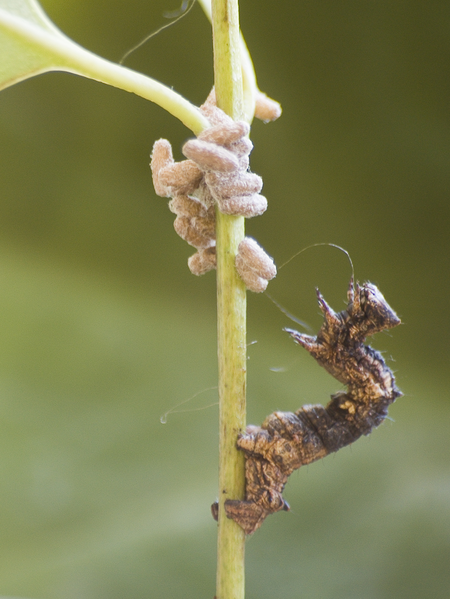
When a fertile Glyptapanteles wasp is about to lay her eggs, she seeks out a caterpillar. While it is unknown if the wasp can parasitize any species, it is know to seek out at least three specific species: Lymantria dispar, the Gypsy Moth; Chrysodeixis chalcites, the Golden Twin Spot Tomato Looper; and Thyrinteina leucocerae, the Geometrid Moth. Upon finding one of these caterpillars, she stings it, injecting a paralyzing venom to keep her subject still. This is key as the wasp will then stab the caterpillar with her ovipositor and then proceeds to lay up to 80 eggs inside the caterpillar's body. Once this is finished, the wasp simply flies off leaving the caterpillar to slowly recover.

For a while the caterpillar goes back to its life of constant eating, probably wishing the previous events were just a horrible nightmare or a case of sleep paralysis. Unfortunately for our surprisingly self aware caterpillar, it did really occur and those eggs soon hatch and the larvae begin gorging on the insides of their warm squishy home. They don't go so far as to kill the caterpillar as they have need of it for later.

Eventually the larvae are are ready to pupate, but they must first exit their home/buffet. So they begin the process of eating their way out of the now somewhat hollowed caterpillar. They then spin their cocoons nearby. If evolution were merciful, the caterpillar would now be able to know the sweet embrace of death. Instead, the caterpillar actually heals its wounds and remains alive, though it is left in a somewhat altered state. It loses all interest in eating and instead focuses on the cocoons, spinning extra protective webbing around them and even charging and attacking any insect that gets to close. Why would it protect its former tormentors? The reason wasn't certain for quite a while until it was noted that some of the larvae don't leave their host. These larvae instead sacrifice themselves for the good of the many by taking control of the behavior of the caterpillar.


I'm sure you never thought you could say that you have seen a zombie caterpillar, did you?


Eventually, adult wasps emerge from their chrysalides and fly off. The caterpillar turned zombie guard dog is left to slowly starve, still watching over the empty shells.
Facebook Digg Stumble Delicious Twitter Reddit Technorati

Macropinna microstoma the Barrel-Eyed Fish

Macropinna microstoma is a species of fish that shows that the evolutionary process really does not care as long as you have a survivable species. While most of its body is normal, its head looks like it should have been part of a submersible. You see, the Barrel-Eye, as it is commonly known, has decided that having eyes on the outside of its head was just some passing trend. Instead, it prefers to keep them inside the confines of its transparent head for safe keeping.


This fish laughs in the face of conformity.


Bizarre little critter, isn't it? Now that image needs a bit of explaining as the normal features one would expect just aren't right on this thing. Those two things up front that look like a cartoonists representation of eyes are in fact its nares. Nares are the olfactory structures of fish. These sensing organs are usually not quite this noticeable on your average fish, but the Barrel-Eye has a particularly developed set. The fact that they are facing forward on a transparent dome only makes them more conspicuous.

The real eyes are the two bubble looking structures inside the head. Those bubbles are actually massive lenses used by the fish to focus the dim light better. They get their name for the fact that the entire eye is cylindrical like a barrel. They tend to stay mostly motionless in the water column (which explains the large fins) with its eyes facing upward hoping to spot the silhouette of passing prey items. Also of note is the fact of the green pigment in the eyes. It is hypothesized that this is designed to filter out the last bits of natural sunlight that reaches the fish (as green light penetrates the deepest) so that it can focus on the bio-luminescence of its intended meal. The eyes get even stranger when you realize they can rotate to face forward.


Never has the simple turning of the eyes looked so strange.


So why does this fish have its eyes encased in that fluid filled head of its? The best guess comes from the prey items of this fish. Stomach contents show that it preys on sea jellies frequently. Having its eyes enclosed would allow them to be out of the reach of the cnidocytes (stinging cells) on the jellies tentacles. Another hypothesis is that the Barrel-Eye actually steals prey caught by siphonophores. Siphonophores being a colonial species of Cnidarian (the phylum all sea jellies, anemones, corals and hydras belong to) that looks like a long rope with tentacles along the length in clusters for catching prey.


The siphonophore Praya dubia, which may be one of the longest organisms with a length recoded to over 40 meters (131 feet)


Siphonophores are one of the more efficient hunters of the deep oceans, so feeding off of their catches would be a great strategy for a fish to develop. Even better, most siphonophores use bio-luminescence to attract prey, the green tinted lenses mentioned earlier would be especially helpful in picking this out.

The Barrel eye has been noted to live at the depths of 600 meters (2,000 ft) to 800 meters (2,600 ft), so unless you have access to a deep water submersible, there is little chance of encountering this critter on your next dive. Once again proving that the deep ocean gets to have all the crazy creatures.
Facebook Digg Stumble Delicious Twitter Reddit Technorati